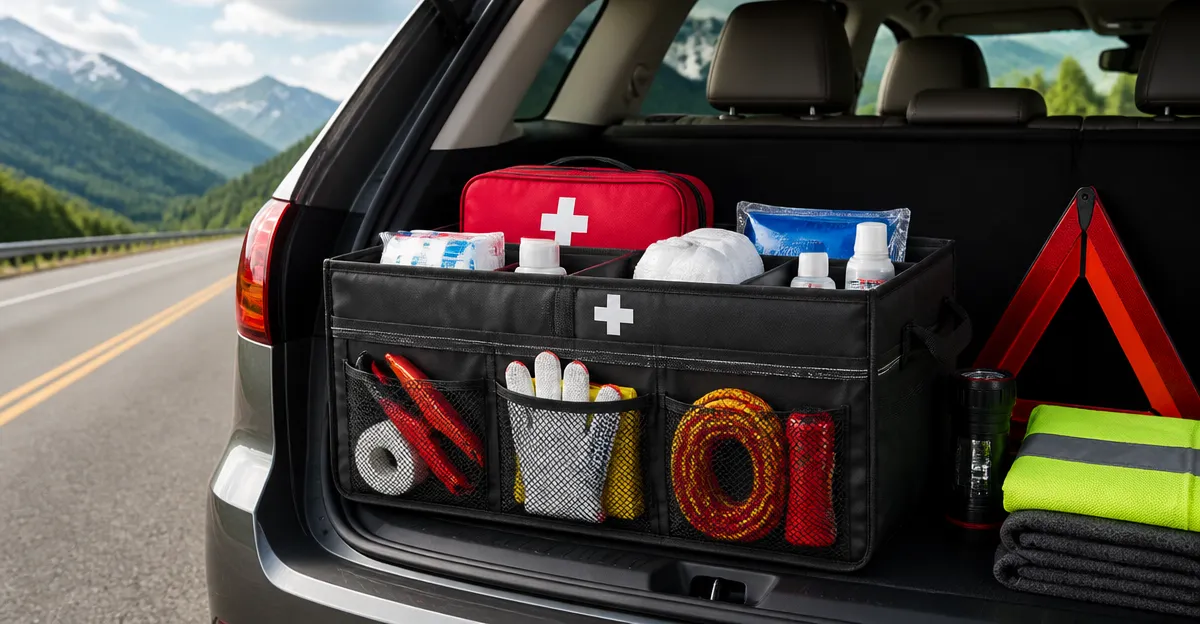
How to Build the Ultimate Road Trip First Aid Trunk Organizer: Complete Kit List and Best Product Comparisons
Introduction
The reader will learn how to create a comprehensive first aid trunk organizer that addresses medical emergencies, roadside incidents, and long‑term durability during extended travel. This guide emphasizes systematic selection, strategic placement, and regular maintenance to ensure that every essential item is accessible when needed. By following the step‑by‑step instructions, one can transform a simple storage bag into a professional‑grade emergency solution without excessive spending. The approach balances cost‑effectiveness with the reliability of trusted brands, making it suitable for families, outdoor enthusiasts, and anyone who values safety on the road.
What You'll Need
- Faylapa Empty First Aid Bag – lightweight, water‑resistant Oxford cloth, 10.2×5.5×5.5 inches, $11.35, 4.5/5 rating.
- Band‑Aid Travel First Aid Kit – 80‑piece compact kit, $10.98, 4.8/5 rating.
- Band‑Aid Compact First Aid Kit – 160‑piece all‑purpose kit, $18.36, 4.8/5 rating.
- Vriexsd First Aid Kit – 400‑piece large kit, $39.99, 4.8/5 rating.
- Everlit Car Emergency Kit – 108‑piece roadside kit with digital tire inflator, $69.95, 4.7/5 rating.
- Heavy‑duty zip ties, label stickers, and a permanent marker for organization.
Step 1: Choose a Durable Storage Container
Begin by selecting a container that can endure the rigors of travel, moisture, and frequent handling. The Faylapa Empty First Aid Bag provides a compact yet spacious interior, with multiple pockets that simplify categorization of supplies. Its water‑resistant Oxford fabric protects contents from rain or accidental spills, while the reflective strip enhances visibility at night. At a price of $11.35 and a 4.5‑star rating, the bag offers excellent value compared with bulkier alternatives that lack dedicated compartments.
To prepare the bag, open all zippered sections and lay it flat on a clean surface. This orientation reveals the internal layout, allowing one to plan where each category of supplies will reside. The bag’s dimensions (10.2×5.5×5.5 inches) fit comfortably in most vehicle trunks, under seats, or in back‑seat storage compartments. By using a dedicated bag, one avoids the clutter that typically accumulates when items are stored loosely in the trunk.
Step 2: Assemble Core Medical Supplies
The foundation of any first aid trunk organizer consists of essential wound‑care items, pain‑relief medications, and infection‑prevention tools. For a minimal yet complete set, the Band‑Aid Travel First Aid Kit supplies 80 pieces, including cleansing wipes, gauze pads, antibiotic cream, and assorted adhesive bandages. Priced at $10.98 and supported by a 4.8‑star rating, this kit delivers reliable brand‑name products in a travel‑size case, making it ideal for quick access in emergencies.
For travelers who anticipate a broader range of injuries, the Band‑Aid Compact First Aid Kit expands the inventory to 160 pieces, adding itch‑relief cream, a non‑medicated instant ice pack, and additional bandage sizes. At $18.36, the kit remains affordable while offering FSA/HSA eligibility, which can offset costs for some users. The inclusion of BENADRYL for allergic reactions and BENGAY for muscle aches provides a more comprehensive response capability.
For those seeking an even larger inventory, the Vriexsd First Aid Kit delivers 400 pieces, featuring a tourniquet, emergency blanket, and a first‑aid guide. Priced at $39.99 with a 4.8‑star rating, this kit is suited for families, disaster‑preparedness plans, or extended backcountry trips. The smart‑compartment design, using labeled sections, streamlines retrieval during high‑stress situations.
Place the chosen kits inside the Faylapa bag according to the following hierarchy: (1) bandages and gauze in the front pocket, (2) medication and creams in the middle compartment, (3) larger items such as the tourniquet or ice pack in the rear pocket. This arrangement mirrors the natural sequence of wound assessment, treatment, and after‑care, reducing the time required to locate each item.
Step 3: Add Roadside Emergency Tools
Medical supplies alone do not address vehicle‑related incidents such as flat tires, dead batteries, or stranded situations. The Everlit Car Emergency Kit integrates a digital auto tire inflator, 12‑foot jumper cables, a tow strap, and a reflective warning triangle, among other essentials. At $69.95 and a 4.7‑star rating, the kit consolidates 108 items into a single portable bag, reducing the need for multiple separate purchases.
The digital tire inflator features an auto‑shutoff function, which prevents over‑inflation and conserves vehicle battery power. By plugging the unit into the 12‑V outlet and setting the desired pressure, the user can restore tire pressure within minutes, a critical capability on remote highways. The 8‑gauge, 12‑foot jumper cables provide sufficient length to connect to a second vehicle while delivering 300 amps of current, ensuring reliable engine starts.
Incorporate the Everlit kit into the Faylapa bag by securing it with zip ties to the exterior loops, allowing quick extraction without opening the main medical compartments. Position the jumper cables along one side of the bag, and store the inflator in the bottom compartment where its weight adds stability. This layout keeps high‑visibility items such as the warning triangle readily accessible.
Step 4: Organize Supplies Within Compartments
Effective organization reduces panic and saves valuable seconds during an emergency. Begin by labeling each pocket of the Faylapa bag with clear, waterproof stickers: "Bandages," "Medications," "Tools," and "Documentation." Use a permanent marker to write concise descriptions beneath each label, such as "Antibiotic Cream" or "Jumper Cables." The labeling system mirrors the compartmentalization found in the Vriexsd kit, reinforcing a familiar visual cue for users.
Next, arrange items by frequency of use. Items required for immediate wound care—such as adhesive bandages, gauze, and antiseptic wipes—should occupy the topmost pocket. Secondary items like the ice pack, pain relievers, and itch‑relief creams belong in the middle section, while bulky tools such as the tourniquet, emergency blanket, and tire inflator are placed at the bottom. This tiered approach mirrors the logical progression of emergency response, from assessment to treatment to after‑care.
Secure loose components, such as the digital inflator hose and the tow strap, with zip ties or elastic bands to prevent movement during vehicle motion. The Faylapa bag’s full‑zip design ensures that the contents remain protected from dust and moisture, while the reflective strip on the exterior aids visibility if the bag is needed in low‑light conditions.
Step 5: Test and Maintain Your Kit
After assembling the organizer, conduct a full inventory check to confirm that each item is present and functional. Verify that the digital tire inflator powers on, the jumper cables are free of corrosion, and medication expiration dates are within acceptable limits. This verification should be performed at least once every six months, aligning with best practices for emergency preparedness.
Replace any depleted supplies, such as used bandages or expired pain relievers, with fresh equivalents from the same trusted brands. The Band‑Aid kits allow easy refilling, as the case is designed for open‑top access. For the Vriexsd kit, restock the tourniquet and emergency blanket in accordance with the manufacturer’s recommendations.
Finally, store the Faylapa bag in a dedicated trunk compartment that remains upright, preventing items from shifting during sudden stops. Periodically practice retrieving key items, such as the jumper cables and the first‑aid guide, to ensure that all users are familiar with the layout. This rehearsal builds confidence and reduces response time during real emergencies.
Tips & Pro Tips
- Keep a printed copy of the first‑aid guide from the Vriexsd kit in the glove compartment for quick reference.
- Use a small resealable bag for any liquid medications to prevent leakage.
- Consider adding a small flashlight or headlamp to the Everlit kit for nighttime repairs.
- When traveling internationally, verify that medication dosages comply with local regulations.
- Rotate stock annually to avoid expiration of critical supplies.
Troubleshooting
- Problem: Digital tire inflator does not start.
Solution: Ensure the vehicle’s 12‑V outlet is active, check the fuse, and verify that the power cable is fully inserted. - Problem: Bandages are difficult to locate.
Solution: Re‑label the pocket with larger lettering and consider using a color‑coded system for different bandage sizes. - Problem: Medication expires before the next road trip.
Solution: Store a spare set of time‑sensitive items in a secondary, smaller pouch that can be swapped out easily.
Conclusion
The reader now possesses a clear, actionable framework for constructing a robust first‑aid trunk organizer that integrates medical supplies, roadside tools, and systematic organization. By selecting the Faylapa Empty First Aid Bag as the foundation, layering the Band‑Aid kits for scalable medical coverage, incorporating the Vriexsd kit for extensive preparedness, and adding the Everlit Car Emergency Kit for vehicle‑specific emergencies, one achieves a balanced solution that addresses both health and mechanical contingencies. Regular maintenance and practice ensure that the organizer remains reliable throughout every journey, reinforcing safety and peace of mind on the road.
Frequently Asked Questions
What essential items should be included in a road‑trip first‑aid trunk organizer?
Include a lightweight first‑aid bag, band‑aid kits, antiseptic wipes, gauze, adhesive tape, pain relievers, emergency blankets, and basic tools like a flashlight and tire‑inflation kit.
How can I keep my first‑aid supplies organized and easily accessible in the trunk?
Use a dedicated compartmentalized bag or tote, label each pocket, and store it in a fixed position near the rear seat for quick reach.
How often should I inspect and restock my road‑trip first‑aid kit?
Check the kit before each trip and replace expired items every 6‑12 months or after any use.
Is it necessary to buy a water‑resistant first‑aid bag for the trunk?
Yes, a water‑resistant Oxford‑cloth bag protects supplies from moisture and temperature changes, extending their shelf life.
Can I build a professional‑grade first‑aid organizer without spending a lot?
Absolutely; select budget‑friendly, high‑rated products like the Faylapa bag and combine them with inexpensive consumables for a cost‑effective solution.